Why visit
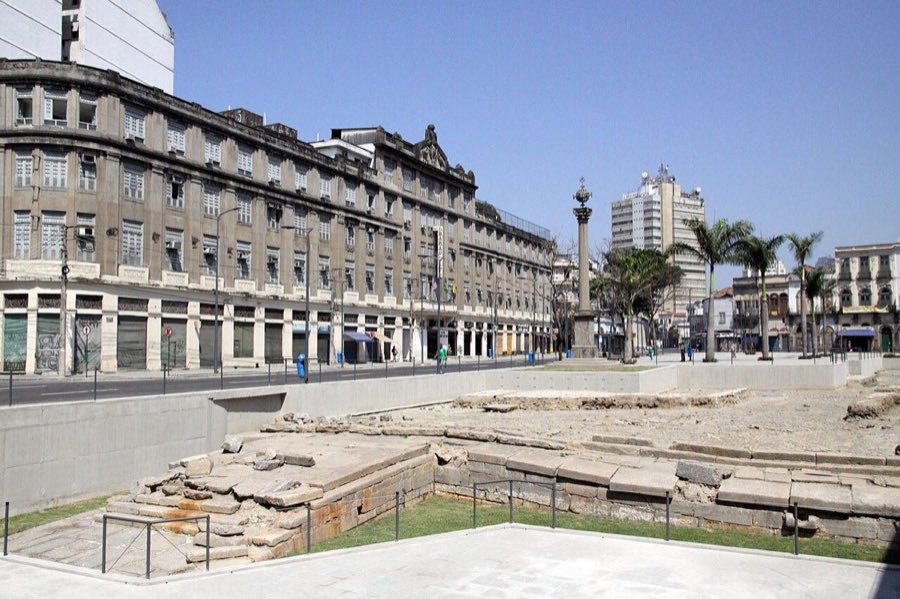
Built in 1811 for the landing of enslaved Africans, the quay officially closed in 1831 when trafficking was prohibited by law. Slavery itself did not end. In 1843, a new layer welcomed Empress Teresa Cristina as the Empress’s Wharf. The overlapping stones reveal how a celebration of monarchy physically covered the violence of trafficking, leaving distinct histories within one place.
What to look for
- Paving of the original 1811 quay
- Layers of the later Empress’s Wharf
Which memories did the city cover over and later reveal?
Visiting details
Open air archaeological site. View from the public area, preferably in daylight; do not touch or enter the remains. Check for works and local restrictions.
Outdoor space with potentially uneven surfaces. Treat map locations as approximate guidance.
World Heritage since 2017. This is an archaeological place, rather than a display gallery.